

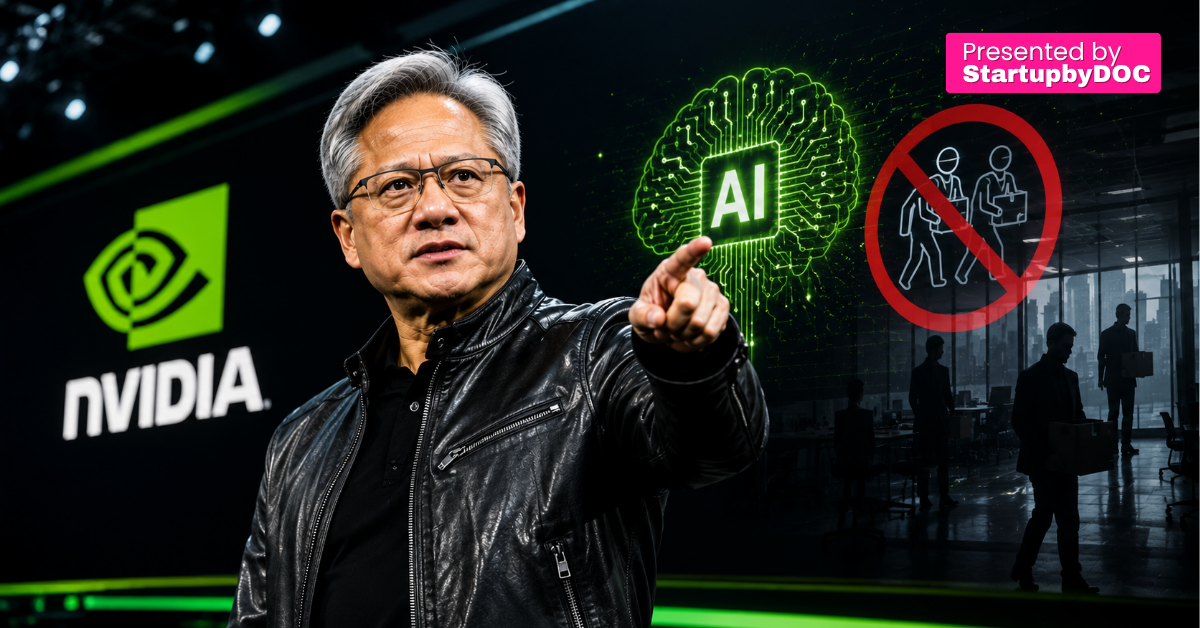
Nvidia Chief Says Linking Job Cuts to AI Is a “Lazy” Narrative
Nvidia CEO Jensen Huang has criticized corporate leaders who attribute layoffs to artificial intelligence, arguing that many companies are using AI as a convenient explanation for workforce reductions that have little to do with the technology itself.
Speaking in a recent interview, Huang described the growing narrative connecting AI to job losses as “too lazy” and questioned how companies could already be blaming artificial intelligence for layoffs when many AI tools have only recently become widely adopted and productive.
The remarks come amid a wave of layoffs across the technology industry, with several companies citing AI-driven efficiency gains as part of their restructuring efforts. Huang, however, suggested that the explanation often oversimplifies a much more complex business reality.
Huang Questions the AI-Layoff Timeline
According to Huang, it makes little sense for organizations to claim that AI is responsible for job cuts when many workforce reductions began long before generative AI became commercially useful.
He argued that some executives are using AI as a narrative to justify decisions that may instead be linked to factors such as overhiring, slowing growth, changing business priorities, or broader economic pressures.
Huang also expressed concern that exaggerated claims about AI replacing workers are creating unnecessary fear among employees and the public.
“We’re scaring people, and that’s irresponsible,” he reportedly said while calling for a more balanced conversation around the technology’s impact on the workforce.
AI Debate Divides Industry Leaders
The comments highlight a growing divide among technology executives regarding AI’s long-term effect on employment. While some leaders have warned that AI could eventually replace a significant number of white-collar jobs, others believe the technology will primarily enhance productivity and create new opportunities.
Huang has consistently maintained an optimistic outlook, arguing that AI should be viewed as a tool that helps people work more effectively rather than as a direct replacement for human talent. He recently pointed to examples in software development and healthcare where AI is increasing productivity while demand for skilled professionals continues to grow.
Bigger Questions for Corporate Leadership
The debate arrives as businesses worldwide invest billions of dollars into AI infrastructure, software, and automation tools. Investors have largely rewarded companies that demonstrate strong AI strategies, creating additional pressure on executives to showcase their AI ambitions.
Industry observers note that attributing layoffs to AI can also help companies frame difficult workforce decisions as part of technological transformation rather than operational challenges or management mistakes.
As AI adoption accelerates across industries, Huang’s remarks serve as a reminder that the relationship between technology and employment remains far more nuanced than many headlines suggest. The future of work may depend as much on leadership decisions as on the capabilities of AI itself.