

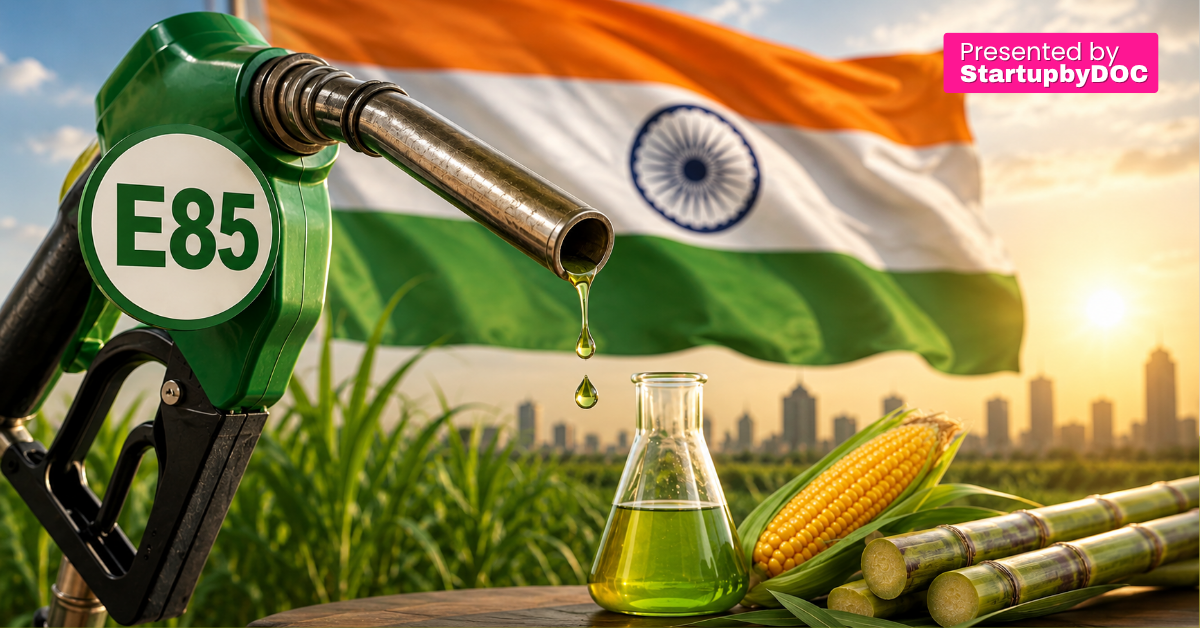
Hardeep Singh Puri Unveils High-Ethanol Fuel as India Expands Alternative Energy Push
India has officially launched E85 fuel, a petrol blend containing 85% ethanol and 15% petrol, marking a major step in the country’s transition toward cleaner and domestically produced transportation fuels. Union Petroleum and Natural Gas Minister Hardeep Singh Puri launched the fuel at an Indian Oil outlet in New Delhi as part of the government’s broader flex-fuel mobility strategy.
The launch aligns with India’s efforts to reduce dependence on imported crude oil, strengthen energy security, and create additional demand for domestically produced ethanol. E85 fuel is specifically designed for flex-fuel vehicles capable of operating on higher ethanol blends.
Government Targets Nationwide E85 Infrastructure
To support adoption, the government plans to expand E85 availability across major cities. Around 500 fuel stations in Delhi-NCR, Mumbai, Pune, and Nagpur are expected to dispense E85 by the end of 2026, with a long-term target of 5,000 stations nationwide by 2027.
Officials believe the expansion of ethanol infrastructure will help eliminate the traditional “fuel availability” challenge that has slowed adoption of alternative-fuel vehicles in the past. The rollout follows recent launches of flex-fuel vehicles from leading automakers and two-wheeler manufacturers.
Lower Fuel Costs and Farmer Benefits
According to Hardeep Singh Puri, E85 fuel is expected to be priced significantly below conventional petrol, creating a strong economic incentive for consumers to switch to flex-fuel vehicles. The government is also evaluating policy support measures to encourage faster adoption.
Beyond affordability, the initiative is expected to generate greater demand for ethanol produced from agricultural feedstocks such as sugarcane and maize, creating additional income opportunities for Indian farmers while reducing the country’s oil import bill.
Part of India’s Clean Energy Roadmap
The E85 launch represents another milestone in India’s ethanol blending programme, which has become a key pillar of the country’s clean energy and energy security strategy. Industry experts believe the combination of fuel infrastructure, supportive policy measures, and increasing availability of flex-fuel vehicles could accelerate the shift toward low-carbon mobility over the coming years.