

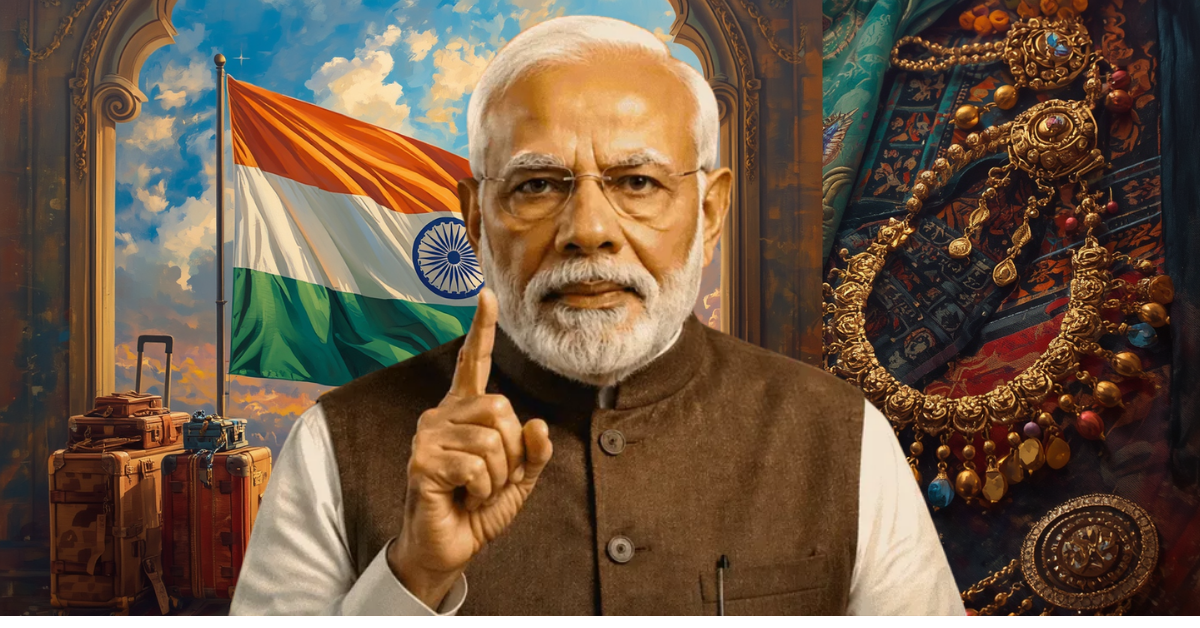
As oil prices rise amid the Iran conflict, Prime Minister Narendra Modi’s appeal to reduce fuel use, gold buying, and foreign travel signals a larger shift in India’s economic priorities.
Why is India suddenly talking about cutting consumption?
India’s economy has long depended on strong domestic consumption to sustain growth. But rising geopolitical tensions in the Middle East are now exposing one of the country’s biggest vulnerabilities: dependence on imported energy. With the Iran conflict disrupting global oil sentiment, crude prices have surged, placing pressure on inflation, the rupee, and India’s fiscal stability.
Prime Minister Narendra Modi recently urged citizens to reduce unnecessary fuel consumption, discretionary gold purchases, and overseas travel. The message was less about temporary sacrifice and more about conserving foreign exchange during a volatile global cycle.
Why does oil remain India’s biggest economic pressure point?
India imports nearly 85 percent of its crude oil requirements, making global supply disruptions immediately visible in domestic markets. Any sustained increase in oil prices directly affects transportation, logistics, manufacturing, and household inflation.
The concern becomes sharper because a large portion of India’s energy imports move through the Strait of Hormuz, a strategically sensitive route impacted by Middle East instability. Rising shipping costs and weaker currency movement could further widen India’s current account deficit in the coming months.
Why has gold consumption become part of the discussion?
Gold remains deeply tied to Indian household savings and cultural spending patterns. However, high import dependence also means rising gold purchases increase pressure on foreign exchange reserves. Reports suggest India’s gold imports touched nearly $72 billion in FY26, raising concerns about capital outflow during an already uncertain global environment.
For policymakers, reducing non-essential imports becomes an economic balancing mechanism during external shocks.
What does this mean for startups and businesses in India?
Higher oil prices could increase operational costs across logistics, mobility, ecommerce, aviation, and manufacturing sectors. Startups operating on thin margins may face pressure on customer acquisition costs and delivery economics. At the same time, work-from-home models, digital infrastructure, and efficiency-led businesses could regain strategic relevance.
The broader message is that Indian businesses may need to prepare for an environment where profitability and capital discipline matter more than aggressive expansion.
Why does Modi’s message matter beyond the current crisis?
The appeal reflects a wider economic reality. India’s next growth phase will depend not just on consumption strength, but also on resilience against global disruptions.
“In uncertain global cycles, economic stability often depends as much on restraint as on growth.”
Vedanta in 2026: A Defining Year of Growth, Debt Pressure, and Strategic Reset