

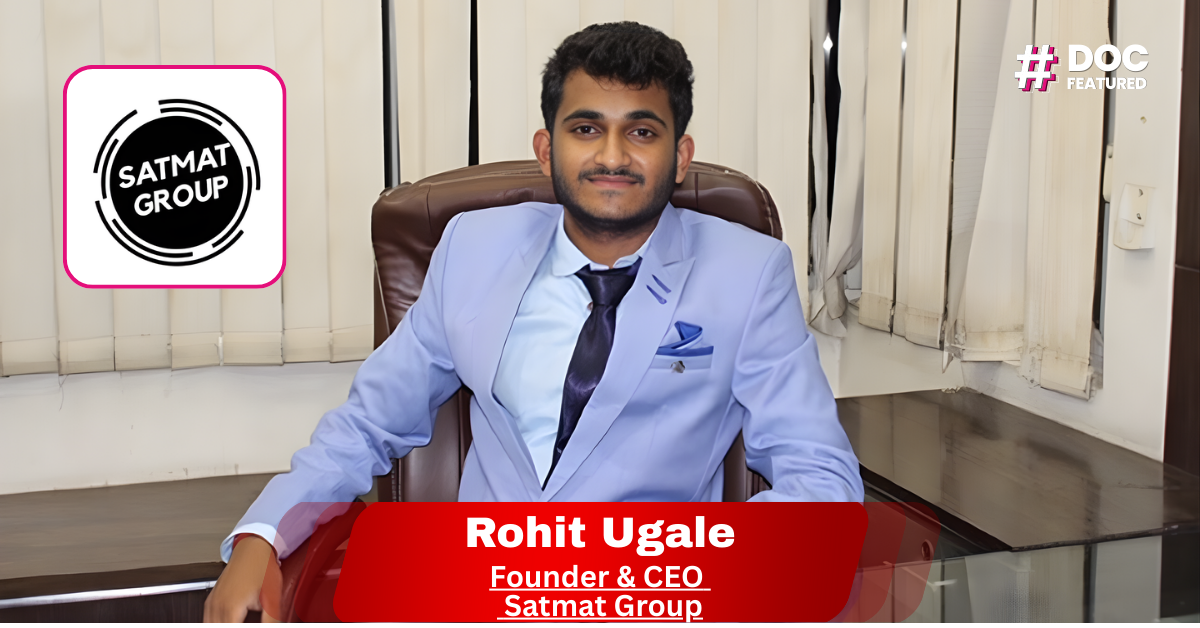
How a young founder from non-metro Maharashtra built a multi-sector tech and fintech group by prioritising execution, regulation, and cash-flow discipline over fast scale.
What happens when early expectations don’t align with ambition?
In small-town India, academic performance often becomes a proxy for future success. Growing up in Sinnar near Nashik, Rohit Ugale encountered this reality early. A Class 10 score of 78 percent, viewed as underwhelming at home, became a moment of quiet reckoning. Without access to elite institutions or exposure to startup ecosystems, the path forward was unclear, but the pressure to prove capability was unmistakable.
How did a non-metro upbringing shape the founder’s mindset?
Ugale’s early environment offered limited advantages but imposed real constraints. There were no accelerators, no angel networks, and little awareness of venture-backed growth stories. What it did offer was proximity to real businesses and practical problems. Learning came not from theory, but from client conversations, delivery deadlines, and early failures that demanded accountability rather than optimism.
Why did Satmat Group begin as a services-first company?
Founded in September 2017, Satmat Group started with IT services for a deliberate reason. Services ensured cash flow, enabled skill-building, and allowed the business to grow without external capital. Instead of chasing rapid scale, the focus stayed on reliability, repeat clients, and execution depth, a model better suited to founders operating outside India’s funding hubs.
What execution choices helped the company stand out early?
Satmat avoided over-specialisation. The company built horizontal capability across web and mobile development, enterprise software, and digital infrastructure. This approach allowed it to serve multiple sectors, including finance, education, real estate, and manufacturing. By solving operational problems rather than pitching futuristic narratives, the business positioned itself as a long-term technology partner.
Which milestones signalled sustainable traction?
Over time, Satmat Technologies delivered more than 4,500 websites and 2,500 mobile applications across global markets. Employment generation crossed 110 professionals, reinforcing operational scale. In 2025, the group entered regulated finance by expanding PFIL Finance, an RBI-registered NBFC, and opening its first physical branch in Nashik, a milestone that reflected institutional intent rather than experimental diversification.
Why did regulation and patience become strategic advantages?
One of the group’s defining decisions was investing early in compliance-heavy fintech infrastructure. The Aadhaar Enabled Payment System, built with banking partners, addressed real needs of migrant workers while navigating regulatory complexity. In 2026, Satmat began transitioning its core tech arm from a services-led model to a product-focused roadmap, choosing readiness over speed.
What can early-stage Indian founders realistically learn here?
The Satmat journey underlines that founders outside metros can compete without shortcuts. Services can fund learning, regulation can be a moat, and credibility compounds faster than visibility. Capital accelerates growth, but execution sustains it, especially in India’s evolving startup climate.
Why does this story matter in today’s startup cycle?
As funding tightens and scrutiny increases, process-driven businesses are gaining relevance. Stories like this reflect a broader shift toward disciplined, long-term company building in India.
“In India’s startup ecosystem, long-term scale follows founders who master process before ambition.”
Keep building. Keep learning. Keep growing with StartupByDoc.