

Can Plastic Waste Become a Valuable Energy Resource?
Plastic pollution has become one of India’s most pressing environmental challenges. The country generates nearly 9.3 million tonnes of plastic waste every year, but only a small fraction is effectively recycled. Much of the remaining waste ends up in landfills, open dumping sites, rivers, and oceans, where it can persist for decades.
Over time, exposure to sunlight, heat, and weather causes discarded plastic to break down into tiny particles known as microplastics. These particles, typically smaller than five millimetres, have now been detected in water, soil, marine life, food, and even the human body. While removing existing microplastics remains a major global challenge, preventing their formation has become equally important.
This growing concern has encouraged innovators to develop technologies that treat plastic waste as a valuable resource rather than an environmental burden.
How Hydroxy Vishwa Is Addressing the Challenge
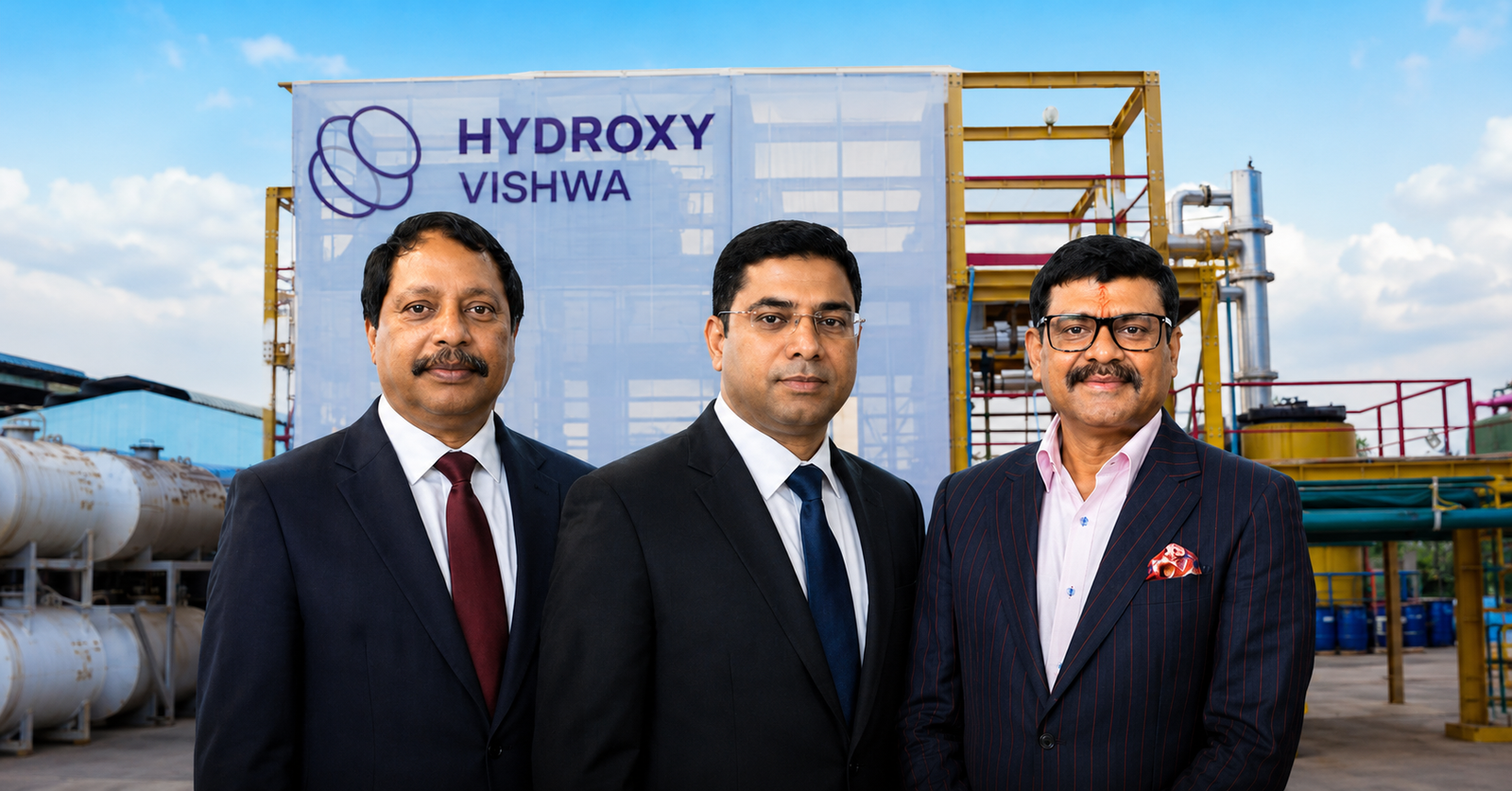
Hydroxy Vishwa Pvt. Ltd., founded by Satish Kumar, Rakesh Reddy, and Vijayaraghavan, has developed a patented technology that converts end-of-life, non-recyclable plastic waste into automotive-grade fuel. Backed by years of technology research, the company aims to tackle two major issues simultaneously plastic waste accumulation and fuel dependency.
Its proprietary process converts plastic into gas before refining it into liquid fuel through depolymerisation and distillation. The final output includes automotive-grade diesel, petrol, and kerosene, while the remaining carbon is recovered as a by-product. The technology focuses specifically on plastic that is difficult or impossible to recycle through conventional methods.
Preventing Plastic from Becoming Microplastics
One of the most significant environmental benefits of this approach lies in prevention.
Instead of allowing discarded plastic to remain in the environment, where it can gradually fragment into microplastics, Hydroxy Vishwa processes the waste before that degradation occurs. In simple terms, the company changes the lifecycle of plastic from:
Plastic Waste → Microplastics
to
Plastic Waste → Automotive-Grade Fuel
This distinction is important. The company’s technology does not remove microplastics that already exist in water, soil, or air. Rather, it helps reduce the amount of plastic that could eventually become future microplastic pollution by diverting difficult-to-recycle waste into productive use.
What Makes the Technology Different?
According to the company, the process operates using electricity rather than fossil fuels and is designed without chimneys, helping minimise direct emissions during operation. Hydroxy Vishwa also states that the system is net-energy positive and produces fuel that requires no additional refining before use.
Unlike traditional recycling, which mainly recovers raw materials, this technology converts waste into a usable energy source while supporting a more circular approach to resource management.
Scaling a Circular Economy Solution
Hydroxy Vishwa reports that it has already processed 2.5 million tonnes of plastic waste and generated approximately 2.2 billion litres of fuel. The company has also announced plans to expand internationally with a new facility in Australia, highlighting the growing global demand for sustainable waste-to-energy technologies.
As governments and industries search for scalable solutions to plastic pollution, innovations like Hydroxy Vishwa’s demonstrate how advanced technology can contribute to both environmental sustainability and energy security. By transforming discarded plastic into valuable fuel and preventing more waste from degrading into future microplastics, the company represents a practical example of how circular economy innovation can address some of today’s most pressing environmental challenges.