

India’s plastic problem is no secret.
From water bottles and food packaging to shopping bags, single-use plastics have become deeply embedded in everyday life. While governments have introduced regulations and consumers have become more environmentally conscious, businesses still face a major challenge: finding sustainable alternatives that are practical, affordable, and scalable.
For most manufacturers, switching to eco-friendly packaging means changing machinery, redesigning supply chains, and absorbing higher costs.
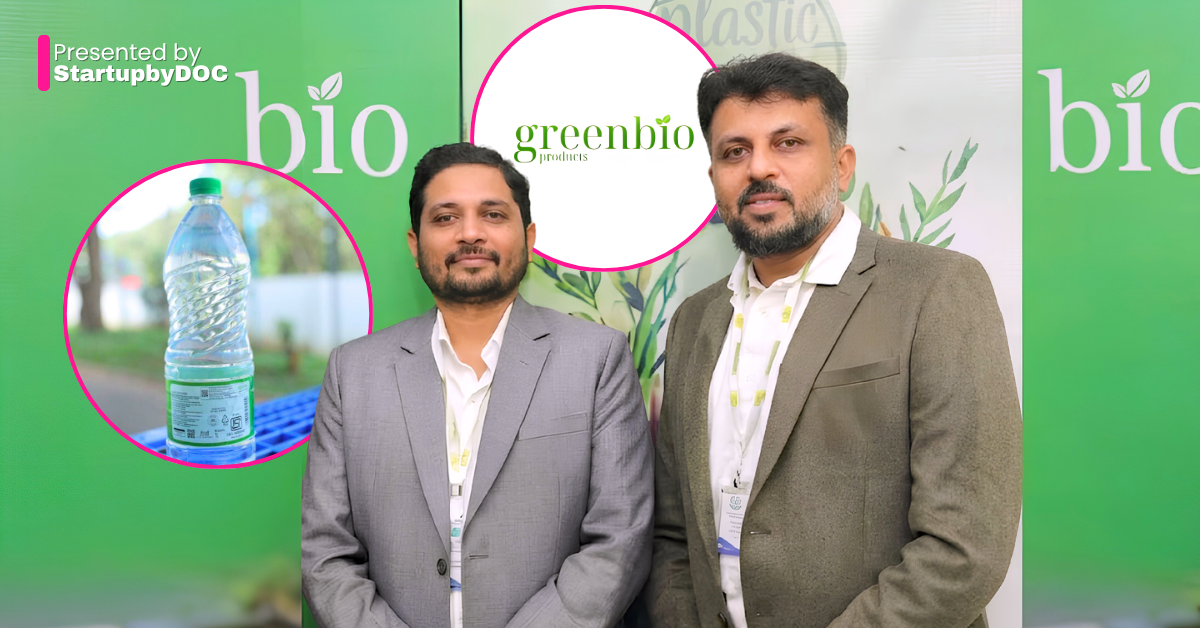
This challenge inspired two childhood friends from Kerala to rethink how sustainable packaging should work.
In 2019, Pradeep Kokkatt and Dr. Ali Asgar launched Green Bio with a simple belief: sustainability would only succeed if businesses could adopt it without disrupting their operations.
How Did Green Bio Begin?
Pradeep Kokkatt and Dr. Ali Asgar saw a growing disconnect between environmental goals and industrial realities. While awareness around plastic pollution was increasing, businesses lacked alternatives that could fit seamlessly into existing production systems.
The founders entered an industry dominated by traditional plastic manufacturers with established networks and lower production costs. Building trust in a relatively new category required patience, product development, and continuous market education.
Rather than competing on environmental messaging alone, they focused on solving a practical business problem.
What Problem Were The Founders Trying To Solve?
The biggest barrier wasn’t the lack of biodegradable materials.
It was adoption.
Most sustainable packaging solutions required manufacturers to invest heavily in new infrastructure. For many businesses, the cost and complexity of switching outweighed the environmental benefits.
The founders realized that unless they removed this friction, widespread adoption would remain difficult.
This insight became the foundation of Green Bio’s strategy.
What Made Green Bio Different From Other Sustainability Startups?
Green Bio developed biodegradable preforms made from Polylactide (PLA), a plant-based bioplastic derived from renewable resources such as cornstarch and sugarcane.
Instead of asking companies to replace their machinery, the startup designed products that could work with existing bottling infrastructure. Beverage manufacturers could transition to sustainable packaging without overhauling their production lines.
The company also ensured that bottle caps, labels, and outer packaging remained biodegradable, creating a complete solution rather than a partial substitute.
How MikroGrenz Is Building India’s Decentralized Microgreens Startup Model
How Did Green Bio Turn Innovation Into A ₹6 Crore Business?
The startup expanded beyond biodegradable bottles into carry bags, grocery bags, cling films, wrapping sheets, and compostable garbage bags.
Support from the Kerala Startup Mission helped strengthen its growth journey, while adoption by Kerala government’s Hilly Aqua water brand validated the commercial potential of its products.
By focusing on business-to-business customers and solving real operational challenges, Green Bio gradually built a scalable business and reportedly reached a valuation of around ₹6 crore by 2025.
What Can Indian Founders Learn From This Journey?
Green Bio’s growth was not driven by a breakthrough marketing campaign or a sudden market trend.
It came from understanding a hidden obstacle and solving it better than others.
Many founders focus on building better products. Green Bio focused on making adoption easier. By aligning innovation with customer realities, the founders created a business that addressed both environmental concerns and commercial needs.
For Indian entrepreneurs, the lesson is clear: sustainable businesses are often built not by changing customer behavior overnight, but by making change easier to adopt.