

India’s ₹8.7 lakh crore jewellery industry has historically been organized around a single governing logic: inventory defines value. Design, distribution, and customer experience have all been shaped by what is available rather than what is desired. While this model has enabled operational scale and predictability, it has also introduced a structural limitation in a category that is inherently personal. Jewellery, despite its symbolic and emotional significance, has largely remained standardized, finite, and supply-driven.
The Emergence of the Intent-Driven Consumer
This paradigm is now being challenged by a generational shift. Millennials and Gen Z are redefining jewellery not as an occasional purchase or financial asset, but as a continuous expression of identity. Consumption is no longer transactional; it is narrative-driven. In this context, consumers are not merely evaluating design or price they are seeking authorship, participation, and meaning.
Inverting the Model: From Availability to Intent
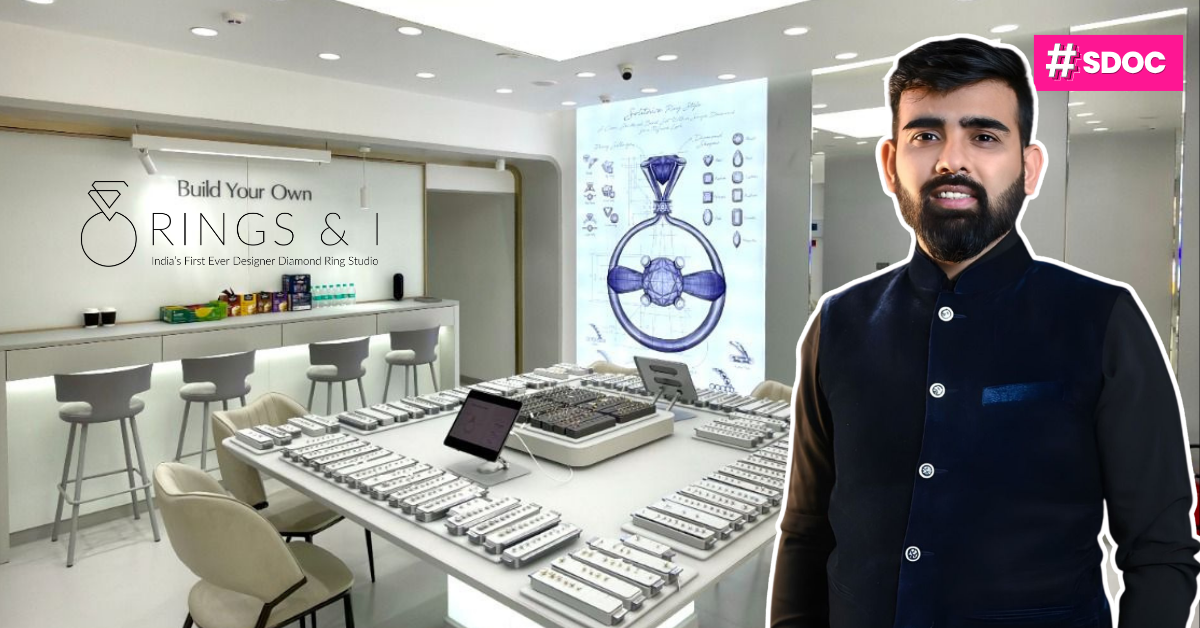
RINGS & I positions itself at the center of this shift by fundamentally reconfiguring the retail logic. Instead of optimizing for inventory turnover, it begins with customer intent. The question is no longer what can be sold, but what can be created. This inversion transforms the consumer from a passive selector into an active co-creator. Each piece is constructed through a guided interplay of preference, context, and possibility, resulting in a product that carries meaning beyond its material attributes.
Operational Leverage Through Zero Inventory
This intent-led model is enabled by a zero-inventory, asset-light architecture. Production is initiated only after demand is confirmed, replacing speculative manufacturing with deterministic creation. The implications extend beyond efficiency. The model unlocks an effectively infinite design surface, enhances capital allocation by eliminating inventory lock-ins, and ensures precision in demand fulfilment. Waste, markdowns, and overproduction are structurally reduced.
Technology as an Enabler, Not a Replacement
Technology plays a critical but carefully defined role. AI-driven systems are used to interpret customer preferences, guide discovery, and structure decision-making. However, in a category defined by emotion and subjectivity, human expertise remains indispensable. This dual-layered system where technology manages complexity and humans anchor meaning ensures that personalization is both scalable and authentic.
Trust as a Designed Input
Trust, historically a point of friction in jewellery retail, is embedded into the system architecture. Transparent pricing frameworks, particularly in diamonds, along with lifetime exchange, buyback, and flexible return mechanisms, are not peripheral features but foundational components. In this model, trust is not an outcome it is an input designed into the experience from inception.
A Category in Cultural Transition
The broader market context reinforces this shift. Jewellery is evolving from an occasional indulgence to a daily expression, from a static asset to a dynamic narrative. By making personalization accessible across price points, RINGS & I aligns with this cultural transition while expanding the scope of who can participate in design-led consumption.
Conclusion: Toward an Intent-Led Future
RINGS & I represents more than a differentiated business model; it signals a redefinition of value creation within the category. The transition from inventory to intent, from selection to creation, and from transaction to relationship reflects a broader evolution in consumption. In this emerging paradigm, value is no longer determined solely by what is produced, but by the depth of its relevance to the individual.
Keep building. Keep learning. Keep growing with StartupByDoc.