

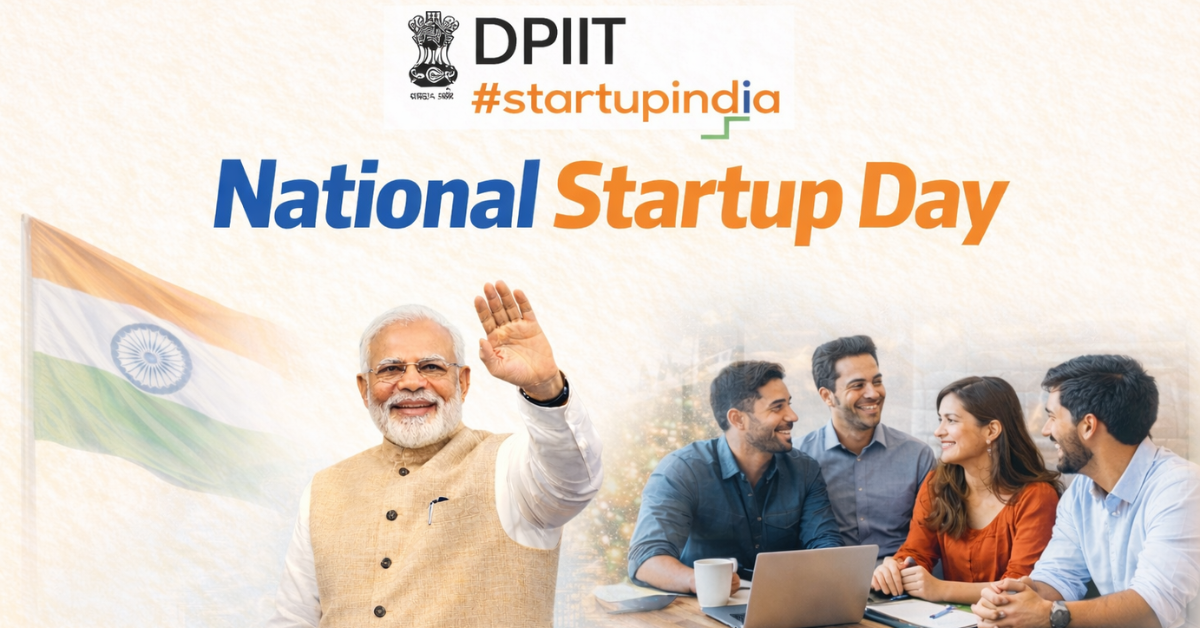
National Startup Day marks 10 years of Startup India, tracing how policy, capital, and founders quietly reshaped India’s economic landscape.
When Startup India was launched on January 16, 2016, it marked a structural shift in how India viewed entrepreneurship. Startups were no longer fringe experiments or urban anomalies. They were positioned as engines of innovation, employment, and long-term economic growth. Ten years later, National Startup Day offers a data-backed lens into how deeply that shift has reshaped India’s economic and business landscape.
The scale of India’s startup ecosystem
As of 2026, more than 1.2 lakh startups have been officially recognised under Startup India, placing India among the top three startup ecosystems globally. What stands out is not just scale, but spread. These startups are active across 600 plus districts, signalling a decisive move away from metro-only entrepreneurship.
Nearly 50 percent of recognised startups now originate from Tier 2 and Tier 3 cities, reflecting a redistribution of opportunity and innovation. Entrepreneurship is no longer confined to Bengaluru, Delhi NCR, or Mumbai. It is increasingly visible in smaller cities where startups are solving local problems in logistics, healthcare delivery, agri-supply chains, education, and MSME digitisation.
Sectorally, the ecosystem has matured over the decade. Fintech, SaaS, healthtech, and edtech defined the first growth wave. The last five years have seen accelerated activity in deeptech, climate tech, electric mobility, space technology, defence manufacturing, and enterprise software, indicating a gradual shift from services-led innovation to technology and manufacturing-led value creation.
State-wise distribution of startups
Startup growth has also been uneven across states, shaped by policy support, capital access, and urban infrastructure. DPIIT recognition data shows a clear concentration in a handful of large states, even as smaller ecosystems continue to scale.
State-wise Distribution of DPIIT-Recognised Startups
| Rank | State / UT | Recognised Startups | Key Startup Hubs |
|---|---|---|---|
| 1 | Maharashtra | 25,000+ | Mumbai, Pune, Nagpur |
| 2 | Karnataka | 15,000+ | Bengaluru, Mysuru |
| 3 | Delhi | 14,700+ | New Delhi |
| 4 | Uttar Pradesh | 13,200+ | Noida, Lucknow, Ghaziabad |
| 5 | Gujarat | 11,400+ | Ahmedabad, Surat, Vadodara |
| 6 | Tamil Nadu | 10,500+ | Chennai, Coimbatore |
| 7 | Telangana | 9,900+ | Hyderabad |
| 8 | Haryana | 8,600+ | Gurugram, Faridabad |
| 9 | Rajasthan | 6,400+ | Jaipur, Udaipur |
| 10 | Kerala | 5,900+ | Kochi, Thiruvananthapuram |
While Maharashtra, Karnataka, Delhi, and Uttar Pradesh dominate in absolute numbers, faster relative growth is now visible in states such as Rajasthan, Gujarat, and Kerala, driven by state-backed incubators, startup policies, and university-linked innovation hubs.
Capital formation and measurable outcomes
Access to early-stage risk capital was one of the biggest constraints before 2016. The government addressed this through the Fund of Funds for Startups, anchored by SIDBI, with a committed ₹10,000 crore corpus deployed via SEBI-registered venture capital funds. Rather than investing directly, the government chose to crowd in private capital.
By 2025, the Fund of Funds had helped unlock ₹80,000 crore plus in downstream investments. In parallel, Indian startups have raised over $150 billion in venture capital since 2016, resulting in the creation of 110 plus unicorns across fintech, consumer internet, enterprise software, logistics, and industrial technology.
Employment and economic spillovers
Startup India’s employment impact is substantial and often understated. Recognised startups have generated over 10 lakh direct jobs, with a significantly larger number of indirect roles created across logistics, manufacturing supply chains, digital services, marketing, and the gig economy. Startup-led employment has also skewed toward higher-skill, technology-enabled roles, strengthening India’s digital workforce and export-oriented services economy.
What policy fixed and what remains unresolved
Startup India reduced early-stage friction through DPIIT recognition, income tax exemptions, angel tax relief, and faster intellectual property processing with up to 80 percent rebates on patent filing fees. These interventions lowered entry barriers and improved founder confidence.
However, challenges persist. Bootstrapped founders continue to face compliance complexity. Manufacturing and hardware startups struggle with long gestation cycles and limited patient capital. Deeptech commercialisation remains slow due to procurement barriers, risk-averse buyers, and gaps in late-stage funding.
The next decade question
As Narendra Modi marks National Startup Day 2026, the policy focus is shifting from startup creation to outcomes. The next decade will be defined by profitability, governance, global competitiveness, AI adoption, climate innovation, and manufacturing scale.
Startup India succeeded in changing India’s entrepreneurial mindset.
The next ten years will determine whether that confidence can be converted into globally enduring companies.
Keep building. Keep learning. Keep growing with StartupByDoc.