

From a Local Nutrition Gap to a Startup Idea
In India, we have mostly kept the debate around healthy food and how to source healthy food at limited platforms like supermarkets. Healthy, clean, and nutritious food is accessible or affordable only to a particular class of people. This was exactly where MikroGrenz also started, not aiming to reach great heights but to solve an issue that was in front of them.
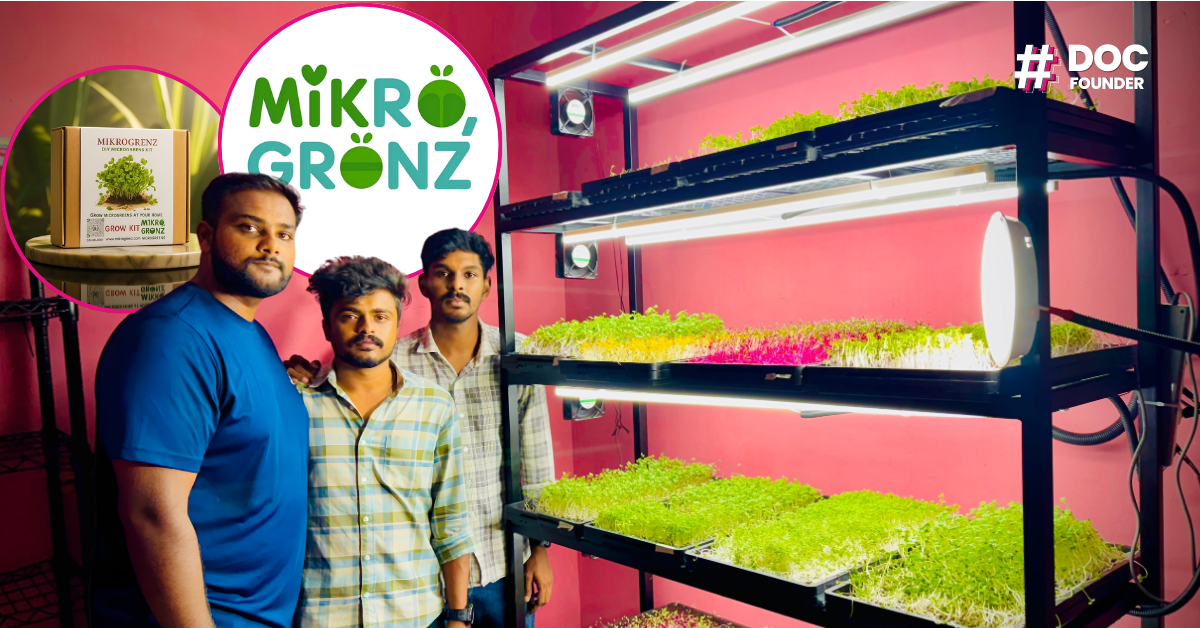
MikroGrenz, a venture in Wayanad in the state of Kerala, was conceived in early 2025 by three friends Basil Varghese, Anurag Mohan, and Muhammed Razin. The trio started with a meager investment and a space of 100 sq ft to try out something new in the space of “microgreens,” which have a high nutritional content.
Early Experiments, Real Constraints, and Learning on the Ground
This first phase was less about growth and more about grasping the mechanism of it all. Yield consistency, seed quality, shelf life, and demand prediction became our daily tasks. In a cost-sensitive environment like India, microgreens were perceived to be a luxury/trend as opposed to a need.
Instead of hastening their expansion plans, they chose to emphasize their chemical-free cultivations and local procurement strategies. They took their time to educate their customers and communities. This helped them at MikroGrenz to streamline their operations while keeping their expenses and wastages in check.
Moving Beyond Farming to Enable Micro-Entrepreneurs
The turning point came when MikroGrenz decided not to remain just a producer. The founders launched a range of products, namely, DIY kits, starter kits, premium seed packs, and end-to-end commercial micro-farms. Their lowest-cost kits start at ₹5,999, and even higher-end commercial micro-farms can go up to ₹80,000.
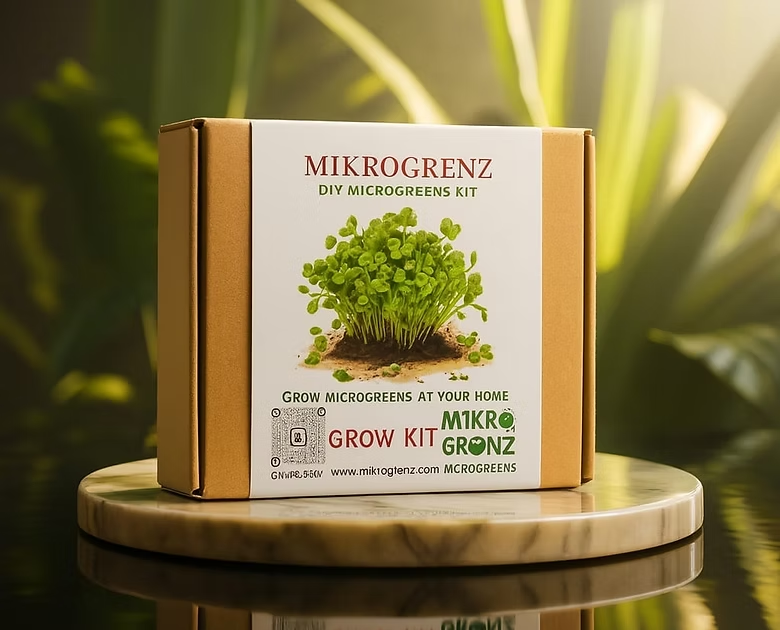

This, in turn, changed the nature of the venture into a platform for participation. Individuals will have an opportunity to enjoy microgreens due to their health benefits, as well as a commercial venture.
A Decentralized Growth Model Built for India
Later, MikroGrenz grew into a decentralized system of micro farms in different locations. Nutritional awareness programs and guided cultivation systems facilitated long-term adoption rather than short-term interest.
Standardization of processes and alignment of production with demand from the locality was an effective method of avoiding overproduction or uneven cash flow-the typical pitfalls a company experiences in its early stages. Growth was assured: steady, organic growth with no injection of funds from outside.
The founder lesson: Build systems before you build scale.
The MikroGrenz journey has a very grounded lesson for early-stage founders in India: start close to the problem, educate the market before you start selling to it, and design systems through which others grow with you.
MikroGrenz proves that sustainable businesses are hardly ever built overnight; they are built patiently, with discipline
For more information, you may also refer to: www.mikrogrenz.com
mail- mikrogrens@gmail.com
Keep building. Keep learning. Keep growing with StartupByDoc.