

Why did India’s MBA model start feeling outdated?
In India, management education has long followed a predictable path: classrooms, case studies, and credentials that signal readiness rather than real capability. As Indian startups became more global, execution-driven, and founder-led, a disconnect emerged. MBAs were training students to analyse businesses, not to build them in fast-moving, real-world markets.
Who were the founders questioning this system?
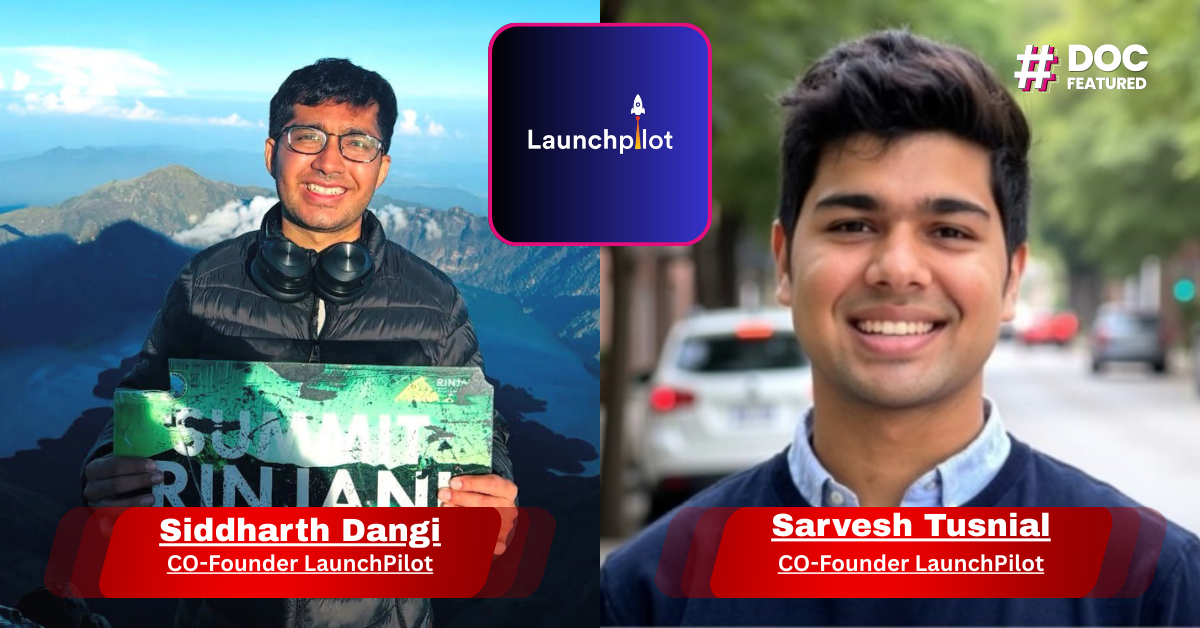
Before becoming founders, Sarvesh Tusnial and Siddharth Dangi were not part of the academic establishment. They had no institutional backing or experience in formal education. What they did have was global exposure, entrepreneurial curiosity, and firsthand frustration with how theoretical business education felt for Indian aspirants.
What problem did they decide to solve in 2024?
In 2024, they co-founded Launchpilot with a simple but risky thesis: if business today is borderless, learning business should be the same. The idea was not to improve the MBA curriculum, but to redesign the system itself.
How was Launchpilot structurally different from traditional MBAs?
Launchpilot’s Borderless MBA replaced classrooms with operating markets. Over 12 months, students moved across startup ecosystems such as Singapore, Silicon Valley, Bangalore, Dubai, and China. Learning followed execution. Mentors were operators. Assessment was based on decisions made and businesses built, not exams cleared.
What early signals showed the model was working?
The first cohorts brought in over 300 learners aged between 20 and 65, including defence professionals, corporate executives, and early-stage founders. The program scaled across eight countries, supported by a global mentor network from technology, consulting, and academic institutions.
Which strategic choices enabled sustainable growth?
Instead of chasing rapid expansion, the founders prioritised cohort quality, operational reliability, and ecosystem partnerships. This restraint helped Launchpilot build credibility in a sector where education startups often scale before stabilising.
What can early-stage Indian founders learn from this journey?
Launchpilot shows that meaningful differentiation comes from rethinking fundamentals. Solve a real structural gap, scale deliberately, and design systems that mirror reality.
Final Take
Strong startups are built by aligning execution with how the world actually works, not how it is traditionally taught.
Keep building. Keep learning. Keep growing with StartupByDoc.