

India’s Precision Manufacturing Is Moving Up the Aerospace Value Chain
As global aircraft production ramps up and defence programmes diversify, OEMs are looking to de-risk supply chains by expanding sourcing beyond traditional geographies. India is increasingly emerging as a precision manufacturing hub, not just for components, but for complex aerostructures that demand scale, consistency, and deep process control.
Facility Launch and Investment Details
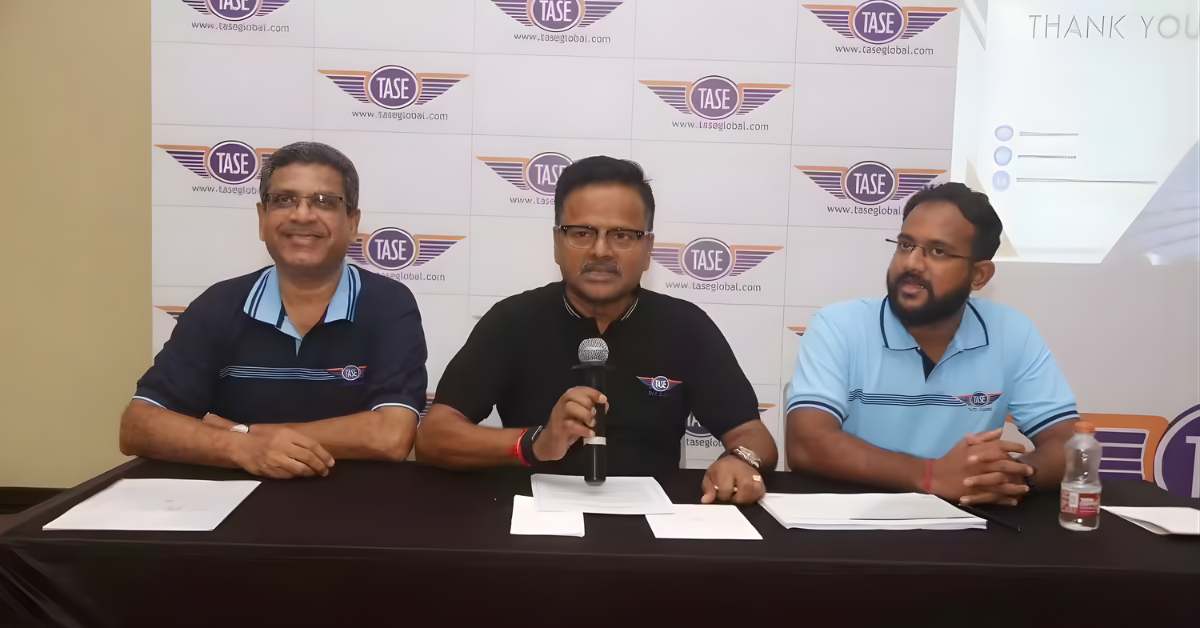
Global precision manufacturing firm Trusted Aerospace Engineering (TASE Global) has inaugurated a new state-of-the-art aerostructures manufacturing facility in Sriperumbudur near Chennai. Built with an investment of ₹150 crore, the 40,000 sq ft facility marks the company’s formal entry into the global aerostructures market, estimated at $70 billion annually.
TASE Global expects the new unit to generate ₹300 crore in annual revenue over the next three years and capture up to $100 million in cumulative revenue, driven by rising civil aviation and defence demand.
What the New Facility Enables
The facility has been set up in partnership with DMG MORI, which has installed 30 high-precision CNC machines integrating automation, IoT, and intelligent software. The unit can machine large aerostructure components up to six metres in length, including frames, spars, ribs, longerons, door assemblies, and floor beams, meeting stringent global aerospace quality and repeatability standards.
In addition to aerostructures, TASE Global continues to manufacture aero engine and precision medical components for export across India, the US, and Europe. The new facility is expected to create around 200 skilled jobs.
Why This Expansion Matters
TASE Global’s move signals a broader shift in India’s aerospace ecosystem, from build-to-print manufacturing toward becoming a strategic Tier-1 partner for global OEMs across the Americas, Europe, Japan, and Asia-Pacific. The company has already outlined its next phases: a ₹40 crore surface treatment facility with zero liquid discharge by April 2026, followed by a ₹60 crore semiconductor manufacturing division by December 2026.
For Indian manufacturing and deep-tech founders, the takeaway is clear: global aerospace and semiconductor supply chains are opening up to India, but winning this opportunity requires long-term capital commitment, technology partnerships, and the ability to operate at international quality benchmarks from day one.
Keep building. Keep learning. Keep growing with StartupByDoc.