

Women’s Health Access in India Remains Uneven
Despite rising digital health adoption, women in India continue to face barriers in accessing timely, confidential, and non-judgmental sexual and reproductive healthcare. Long wait times, social stigma, and limited availability of specialists, especially beyond metros, have left a large care gap. This has accelerated demand for chat-first, always-on digital clinics that prioritise privacy, affordability, and continuity of care.
Funding Snapshot and Capital Use
Mumbai-based AI-led digital clinic Pinky Promise has raised $1 million (around ₹8.3 crore) in a pre-seed funding round led by the Rebalance Angel Community. The round also saw participation from Subramanian Ramadorai, Mala Ramadorai, Ajay Nair, and Shreyas Srinivasan, among others.
The capital will be used to accelerate integrated care offerings, roll out physical clinics, and expand clinically backed nutritional supplements to enable continuity of care at a national scale.
What Pinky Promise Is Building
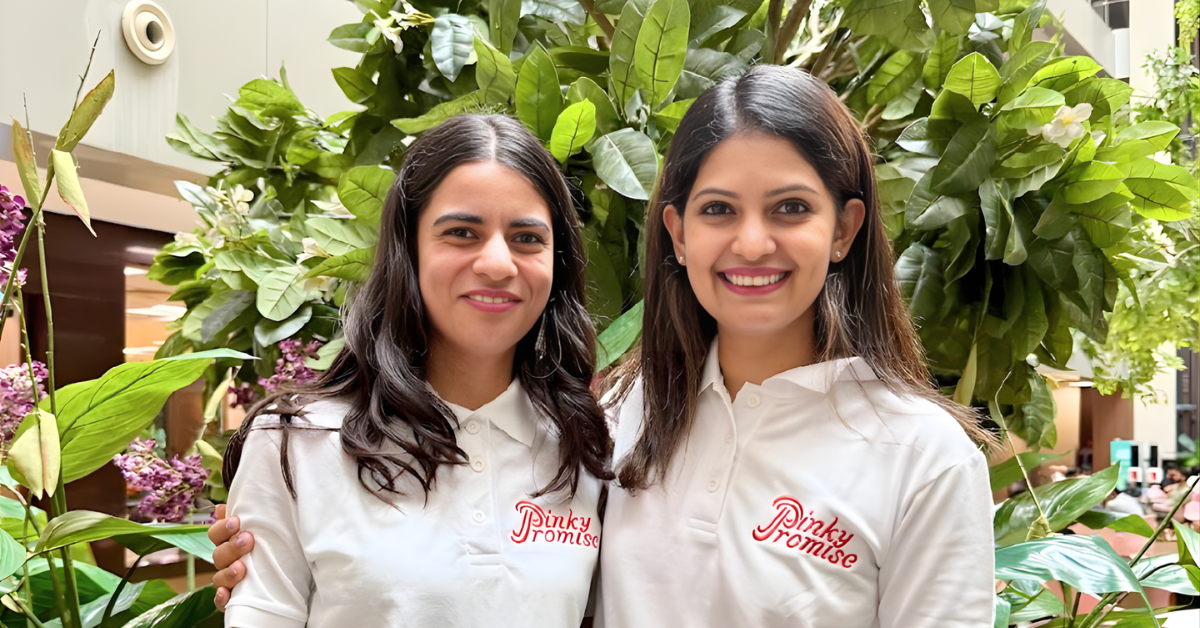
Co-founded in 2020 by Divya Kamerkar and Akanksha Vyas, Pinky Promise is a chat-first, AI-enabled women’s digital clinic offering 24×7 gynaecological care via a mobile app. Available in Hinglish and English, the platform allows women to consult qualified gynaecologists, receive prescriptions, and access follow-up care starting at ₹99. Its AI systems work alongside medical experts to deliver instant, confidential, and affordable care across over 320 symptoms and conditions, including periods, UTIs, PCOS, fertility, pregnancy, and menopause. The startup reports serving over 350,000 women, with 40,000 paying customers across every district in India and a 97.4 percent three-month retention rate.
Why This Funding Matters
Pinky Promise’s traction highlights growing trust in AI-assisted, doctor-led digital clinics for sensitive healthcare needs. As women’s health platforms move beyond consultations into integrated care models combining digital, physical clinics, and products, investor interest is shifting toward outcomes and retention rather than user volume alone. For Indian healthtech founders, the message is clear: accessibility, privacy, and clinical depth are becoming decisive moats in building scalable women’s healthcare platforms.
Keep building. Keep learning. Keep growing with StartupByDoc.