

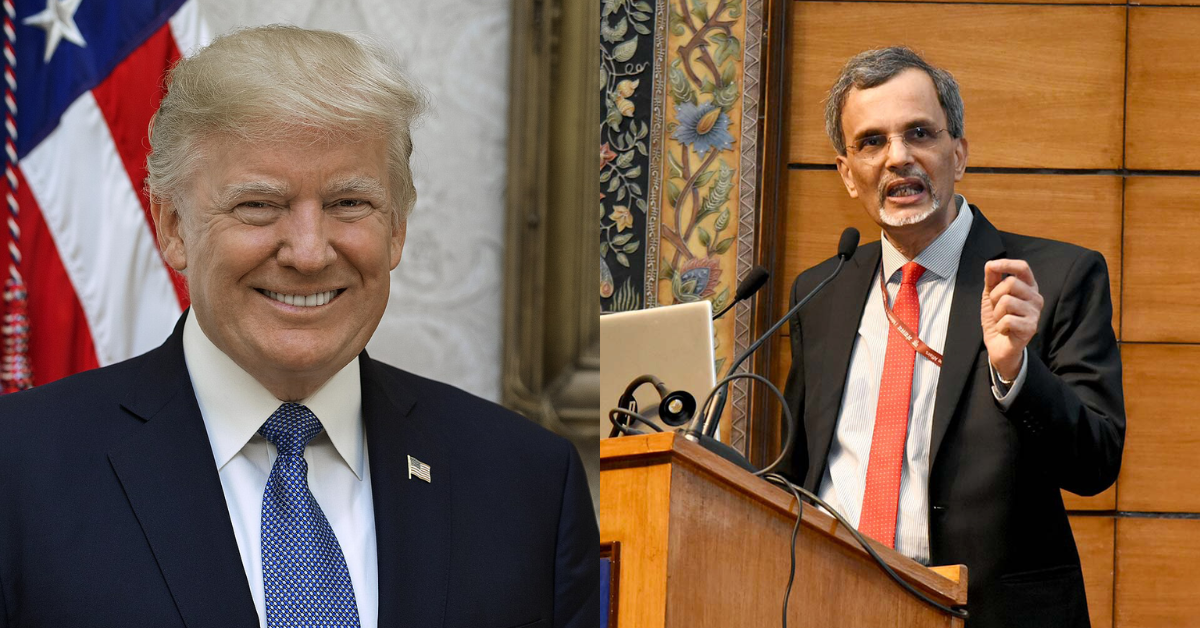
India’s Chief Economic Adviser V. Anantha Nageswaran has cautioned that U.S. President Donald Trump’s move to impose 50% tariffs on Indian exports could shave off nearly 0.5% from India’s GDP growth. The warning comes at a time when India is chasing a $5 trillion economy target and startups are deeply integrated into global trade networks.
Tariffs and the Growth Question
The new tariff structure, aimed at protecting U.S. manufacturing, is set to disrupt India’s export basket textiles, IT services, pharmaceuticals, and engineering goods. According to government data, India’s exports to the U.S. stood at $77 billion in FY24, making America its largest trading partner. Even a partial slowdown could ripple across supply chains, employment, and investment sentiment.
Nageswaran noted that while the domestic economy is resilient, a prolonged tariff war could dampen both FDI inflows and innovation capital. “India must stay competitive while diversifying markets,” he said, pointing to ongoing trade dialogues with Europe, Africa, and Southeast Asia.
Startups in the Crossfire
Startups in pharma-tech, IT outsourcing, and manufacturing enablement face the most immediate challenges. Higher costs on Indian exports may push global clients to renegotiate contracts, forcing startups to either absorb the hit or explore alternate geographies. Sectors like healthcare APIs, AI outsourcing, and D2C brands exporting to U.S. markets are already preparing contingency playbooks.
But it isn’t all bad news. Analysts argue that this could accelerate the “China+1” opportunity, with India strengthening its role in markets outside the U.S. Indian founders may find renewed opportunities in Latin America, the Middle East, and ASEAN, where demand for cost-efficient tech and products is surging.
Government’s Balancing Act
Officials are expected to push back diplomatically while simultaneously expanding Production-Linked Incentive (PLI) schemes and export subsidies. The government is also exploring bilateral trade corridors with the EU and UAE, giving startups alternative gateways to scale.
Final Take
While Trump’s tariffs threaten to slow India’s growth by 0.5%, the deeper story is about how quickly India’s startups can adapt. Those able to pivot markets, embrace supply chain agility, and strengthen domestic demand will emerge stronger. For founders, this is not just a policy challenge — it’s a strategic inflection point.
At StartupByDoc, we’ll continue tracking how policy shocks shape founder strategies. For startups, survival lies not in fear of tariffs, but in building resilience beyond borders.