

India’s education sector has witnessed rapid digital transformation over the last decade. Schools adopted learning apps, management software, communication tools, and online assessment platforms at an unprecedented pace. Yet for many institutions, technology created a new problem: fragmentation.
Teachers were juggling multiple systems. Parents struggled to track information across different platforms. Administrators spent valuable time managing operations instead of improving outcomes. The issue was not a lack of technology. It was the lack of integration.
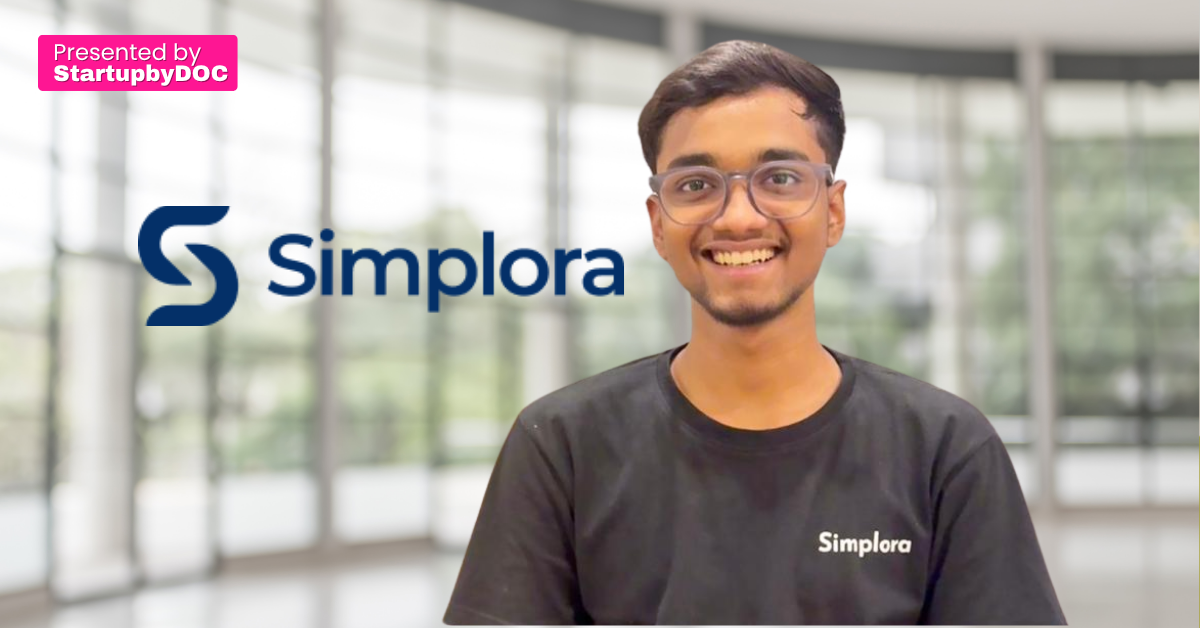
This challenge became the foundation for Simplora, founded by Shivanshu Gupta Arvind.
What Led Shivanshu Towards Entrepreneurship?
Shivanshu’s interest in building started early. While others viewed science as a school subject, he treated it as a hands-on experiment. He spent years working on small projects, testing ideas, and learning through trial and error.
One of his most ambitious projects involved building and launching a rocket model inspired by ISRO’s PSLV-C35 mission. The project took nearly two years of experimentation and multiple failed attempts before it worked successfully.
Those experiences taught him something that would later influence his entrepreneurial approach: problems rarely have instant solutions.
Why Did He Decide to Focus on Education?
During the COVID-19 pandemic, Shivanshu began developing software applications and digital products. As schools and students moved online, he observed a larger systemic issue.
India had talented teachers, motivated students, and growing internet access. However, educational stakeholders often operated in disconnected ecosystems. Information, resources, and opportunities were not flowing efficiently.
Rather than building another standalone edtech product, he saw an opportunity to create infrastructure for the education system itself.
How Is Simplora Approaching the Problem Differently?
Simplora is developing an AI-powered educational ecosystem that brings students, parents, teachers, administrators, and school leaders onto a unified platform.
The company’s focus extends beyond digital learning. It aims to streamline administration, automate repetitive tasks, improve communication, and create personalized educational experiences through intelligent technology.
For early-stage founders in India, the journey offers a practical lesson. Strong startups are often built by identifying operational inefficiencies that others overlook. Success comes not from chasing trends, but from understanding a problem deeply enough to build solutions that users continue to rely on.
Shivanshu’s story is still unfolding, but it highlights an important principle of entrepreneurship: meaningful businesses are built when founders combine curiosity, persistence, and execution to solve problems that affect everyday lives.