

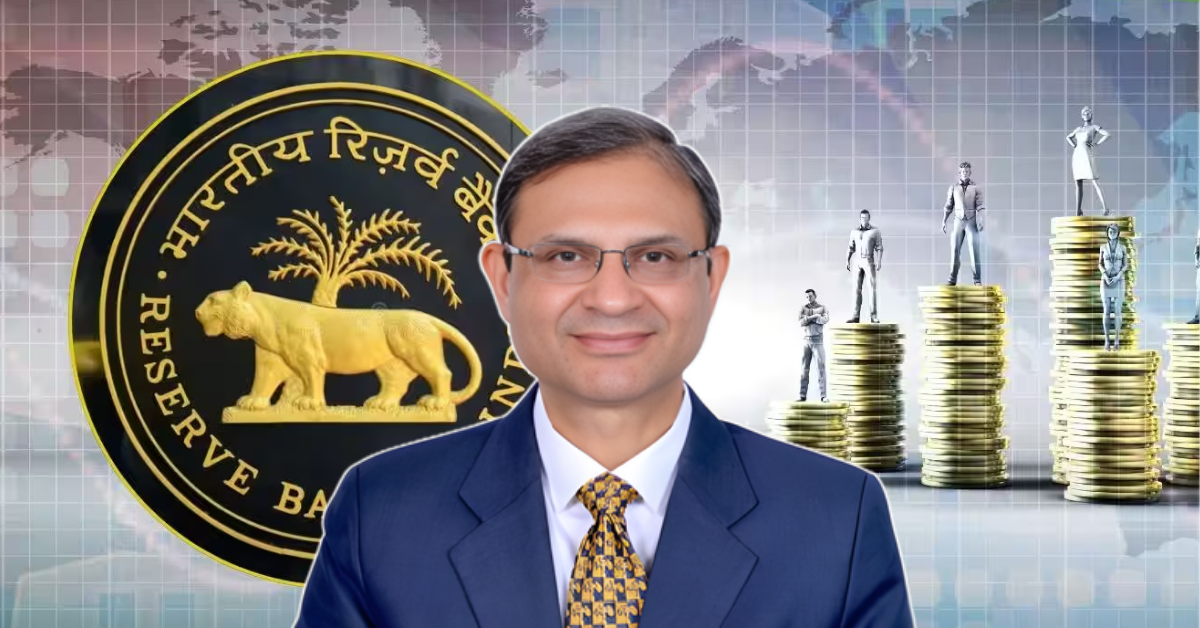
The Reserve Bank of India on Friday announced a fresh set of liquidity infusion measures worth more than $23 billion, as it seeks to ease tightening conditions in the banking system while managing pressure on the rupee.
Under Governor Sanjay Malhotra, the central bank has stepped up durable liquidity support over the past year to reinforce policy rate cuts and offset the impact of its foreign exchange market interventions.
Multi-pronged liquidity injection plan
As part of the announced measures, the RBI will conduct its first-ever 90-day variable rate repo (VRR) operation of ₹250 billion ($2.7 billion) on January 30. The move marks a shift towards longer-tenor liquidity support to keep overnight rates anchored.
This will be followed by a three-year $10 billion USD/INR buy-sell swap auction scheduled for February 4, aimed at injecting durable rupee liquidity while managing dollar supply conditions.
In addition, the RBI will purchase ₹1 trillion worth of government bonds in two tranches on February 5 and February 12.
Record bond purchases this fiscal
The latest bond buying will add to the RBI’s already aggressive open market operations. The central bank has purchased ₹3 trillion of government securities during December–January, taking total bond purchases in the current fiscal year to a record ₹5.7 trillion.
These interventions come amid rising government borrowing and persistent upward pressure on bond yields.
Managing the monetary trilemma
Economists note that the RBI is navigating a classic monetary trilemma balancing currency stability, borrowing costs and capital flows.
“The durable liquidity measures are expected to ensure system liquidity rises to the RBI’s target range of 0.6%–1% of net demand and time liabilities (NDTL),” said Gaura Sen Gupta, Chief Economist at IDFC First Bank.
She added that the 90-day VRR provides temporary liquidity support to prevent volatility in overnight rates, while bond purchases add durable liquidity.
Gupta expects another ₹1 trillion bond purchase in March, which could take system liquidity closer to 0.9% of net deposits.
Rupee and yield pressures persist
The RBI’s action comes against a backdrop of rising bond yields and continued pressure on the rupee. The currency fell to a record low of 91.9650 against the US dollar on Friday, weighed down by foreign portfolio outflows and weakness in domestic equities.
Market participants believe the central bank’s stepped-up liquidity operations are aimed at preventing financial conditions from tightening further, even as global volatility and capital flow pressures persist.
Follow Startupbydoc for daily startup insights, funding news, IPO analysis, and business breakdowns.