

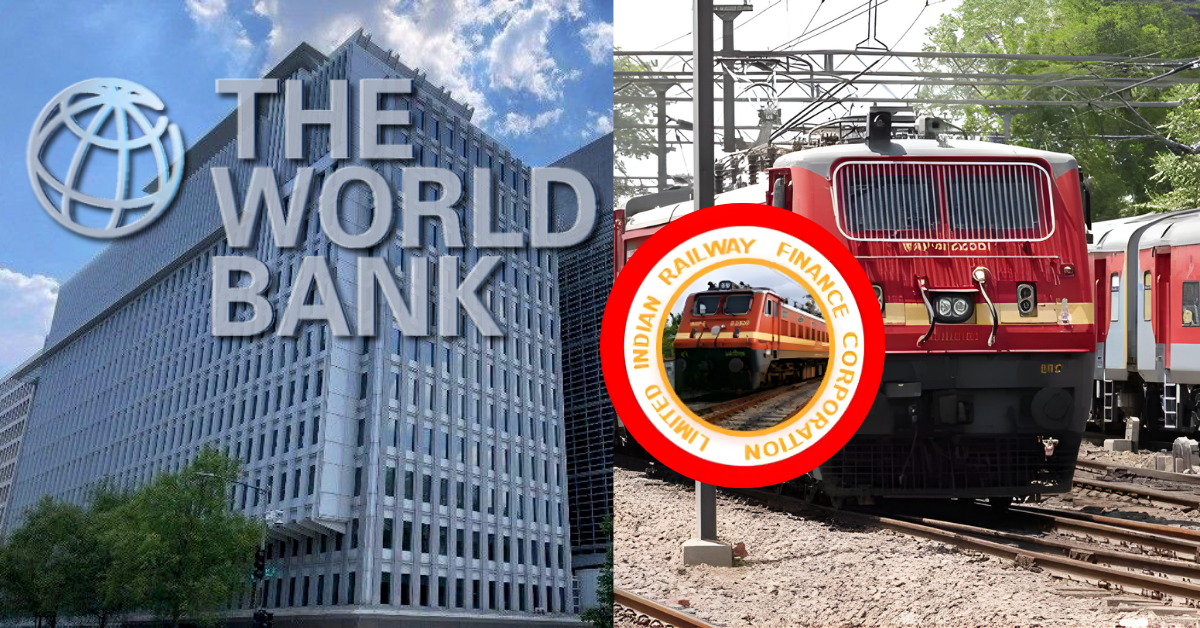
State-owned infrastructure lender Indian Railway Finance Corporation (IRFC) has entered into a refinancing agreement with the Dedicated Freight Corridor Corporation of India Ltd (DFCCIL) to refinance ₹10,000 crore worth of foreign currency loans availed from the World Bank for India’s flagship freight rail infrastructure programme.
DFCCIL, the special purpose vehicle responsible for developing dedicated rail freight corridors, had originally raised the loans to fund the ₹51,000 crore Eastern Dedicated Freight Corridor (EDFC) project. The corridor spans 1,337 kilometres, running from Punjab to Bihar, and connects some of the country’s most critical cargo hubs handling coal, steel, cement and other industrial raw materials.
According to DFCCIL, the refinancing deal has been structured in close coordination with the Ministry of Finance, Ministry of Railways, IRFC and the World Bank. The move is expected to generate savings of nearly ₹2,700 crore for the Government of India, primarily by lowering borrowing costs and reducing exposure to foreign exchange risks.
Terming the transaction “historic”, DFCCIL said this is a first-of-its-kind refinancing arrangement for a large-scale railway infrastructure project in India. By replacing foreign currency loans with rupee-denominated financing from IRFC, the government aims to improve long-term cost efficiency while strengthening domestic financing mechanisms for public infrastructure.
The Eastern Dedicated Freight Corridor is a key component of India’s broader logistics modernisation strategy. Once fully operational, it is expected to significantly decongest passenger rail routes, improve freight train speeds, and lower logistics costs for core industries.
For IRFC, the refinancing deal further reinforces its role as the primary funding arm of Indian Railways, expanding its portfolio beyond rolling stock financing into strategic project-level funding. The transaction also highlights the government’s growing emphasis on optimising public debt and reducing reliance on overseas borrowings for large infrastructure assets.
Follow Startupbydoc for daily startup insights, funding news, IPO analysis, and business breakdowns