

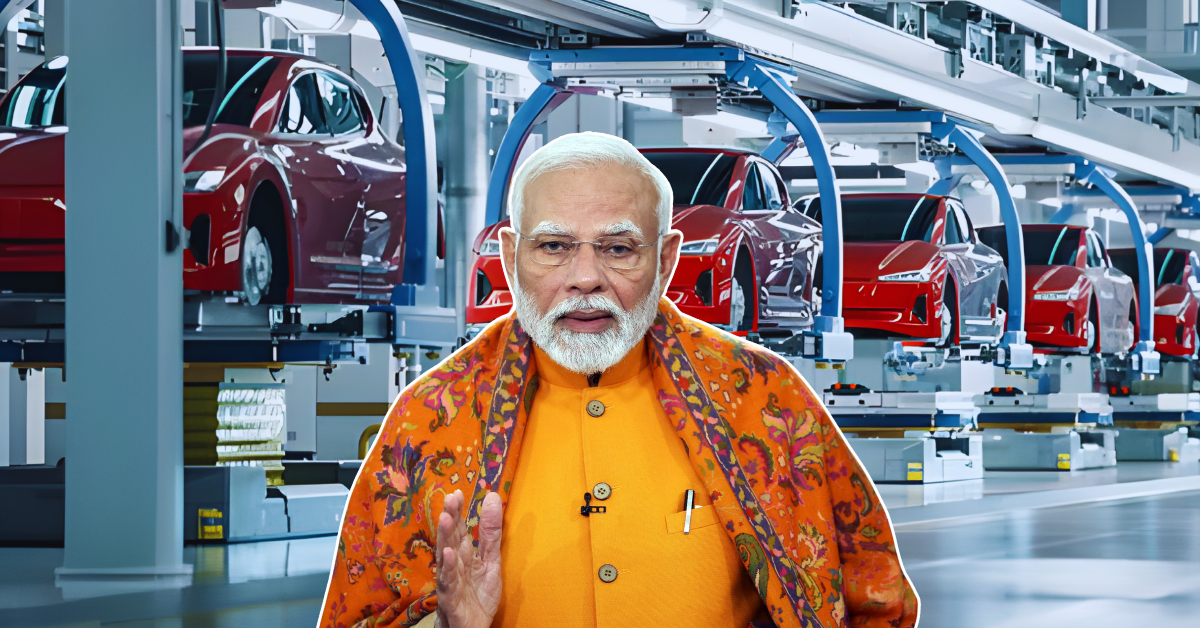
The central government is considering changes to its incentive framework for electric passenger car manufacturing as it evaluates the potential impact of an India–European Union (EU) free trade agreement (FTA), according to a media report. Officials believe the proposed trade deal could lower import duties on electric vehicles (EVs), reducing the attractiveness of the current incentive structure for global automakers to manufacture in India.
The Scheme to Promote Manufacturing of Electric Passenger Cars in India (SPMEPCI), approved in March 2024, has so far failed to attract any applications despite being operational for over a year. The scheme was designed to draw global EV manufacturers by offering concessional import duties in exchange for local manufacturing commitments.
However, automakers have flagged several concerns to the government. These include uncertainty around the contours of the India–EU FTA and restrictions imposed by China on the export of rare earth magnets, a key component in EV motors. Companies have reportedly told policymakers that if a trade agreement offers similar tariff benefits without mandatory investment obligations, the rationale for SPMEPCI weakens.
Industry players have also pointed to high investment thresholds and strict timelines as deterrents. Under the current framework, companies are required to commit a minimum investment of ₹4,150 crore to establish manufacturing facilities in India within a defined period.
SPMEPCI allows approved applicants to import completely built electric passenger vehicles priced at a minimum of $35,000 at a concessional customs duty of 15% for up to five years. The scheme aims to balance near-term market access for global brands with long-term domestic manufacturing goals.
The broader objective is to position India as a global EV manufacturing hub, generate employment, and build advanced automotive technology capabilities. The policy is also aligned with India’s clean mobility push, the Net Zero emissions target for 2070, and the Make in India programme.
According to the report, several global automakers are adopting a wait-and-watch approach and are likely to take a final call only after clarity emerges on the India–EU trade agreement. Sector experts believe the government may rework SPMEPCI to offer more direct incentives beyond import duty concessions once trade negotiations are finalised, making the scheme more competitive and investment-friendly.
Follow Startupbydoc for daily startup insights, funding news, IPO analysis, and business breakdowns.