

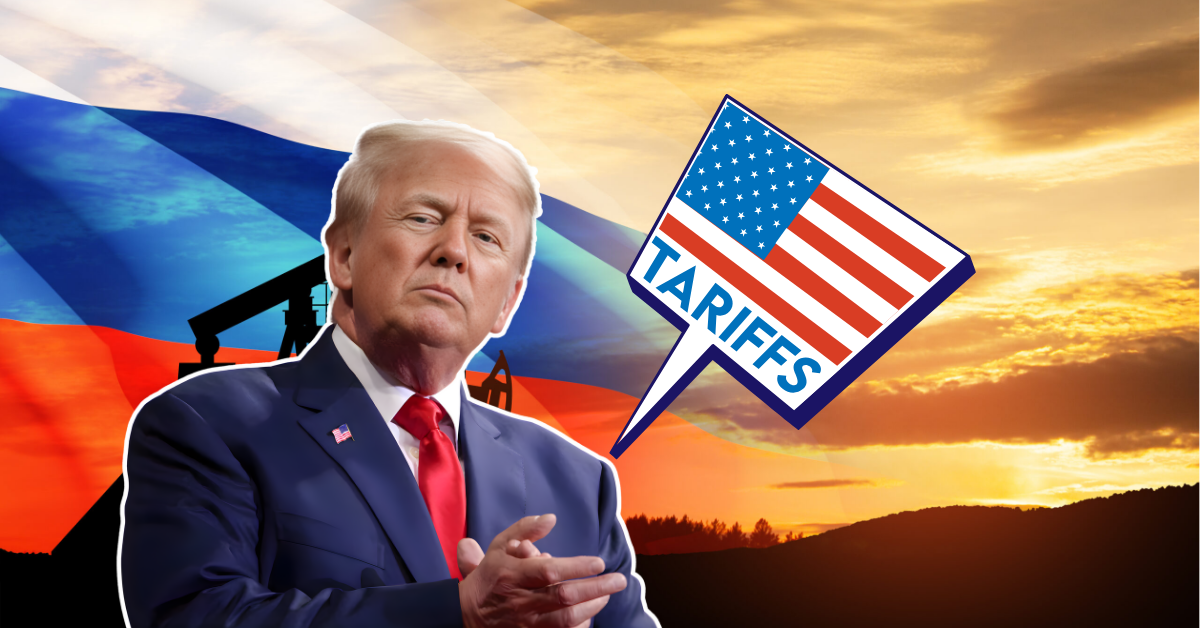
India could face the threat of steep secondary sanctions from the United States, including punitive duties of up to 500%, after US President Donald Trump backed a bipartisan bill targeting countries that continue trade with Russia, particularly in oil and energy.
American Senator Lindsey Graham said President Trump has “greenlit” the proposed legislation, part of the Sanctioning Russia Act of 2025, and is pushing for a strong bipartisan vote as early as next week. The bill seeks to penalise countries that purchase Russian origin oil, gas, and uranium by sharply raising import duties on their exports to the US.
“If the President makes such a determination, the bill requires increasing the rate of duty on all goods and services imported into the United States from such countries to at least 500%,” the draft legislation states. Graham specifically named India, China, and Brazil as key targets, accusing them of financing Russia’s war efforts through discounted oil purchases.
The proposed move could further strain India-US trade relations at a sensitive time. New Delhi and Washington have been negotiating a trade deal for nearly nine months, including efforts to ease the 50% tariff burden already imposed on several Indian exports since August. Of this, 25% has been directly linked to India’s continued imports of Russian crude.
India has emerged as the second largest buyer of Russian oil over the past three years, after China, benefiting from discounted supplies following Western sanctions on Moscow. However, India has recently reduced its Russian crude imports by nearly 38% in December compared to November, marking a three year low.
Trade negotiations between the two countries have stalled since December, with disagreements over agricultural market access, reciprocal tariffs, and India’s energy sourcing strategy. While discussions were expected to conclude by Fall 2025, no fresh talks virtual or in person have been scheduled so far.
Graham said the US strategy is to apply pressure on Russia by targeting its major energy customers if Moscow fails to agree to a ceasefire in Ukraine within 50 days. He added that existing tariffs on India were already influencing New Delhi’s oil procurement decisions.
The bill, if passed, could significantly complicate India’s export outlook and derail progress on a broader bilateral trade agreement, even as both sides attempt to balance strategic ties with economic and geopolitical priorities.
Follow Startupbydoc for daily startup insights, funding news, IPO analysis, and business breakdowns.